Property · · 5 min read
Why Property Records Are Still Fragmented in Nigeria
Let’s consider Tunde. He found a land in 2019. A half-plot in a developing part of Ibadan, sold to him by a man who had inherited it from his father. The…
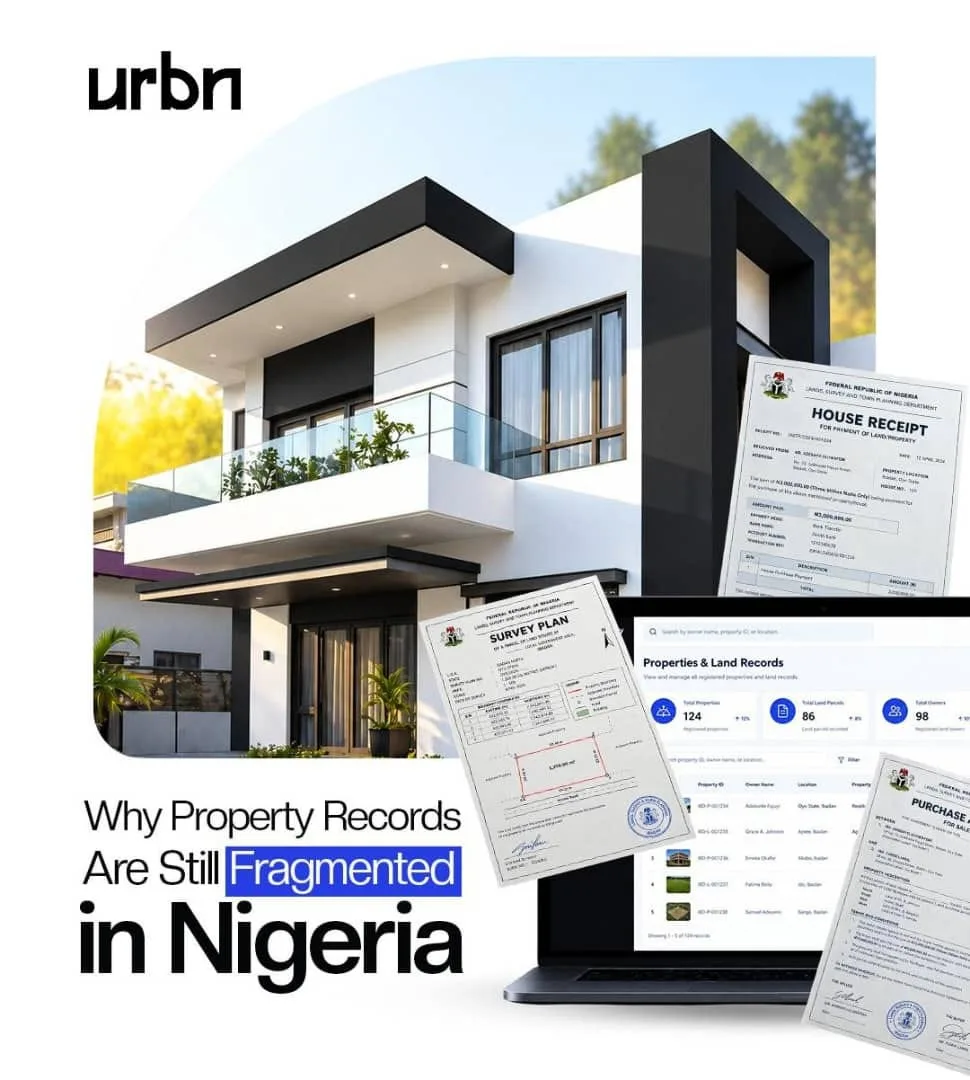
Let’s consider Tunde.
He found a land in 2019. A half-plot in a developing part of Ibadan, sold to him by a man who had inherited it from his father. The seller had a survey plan. He had an old receipt from the original purchase, decades earlier. He had a signed agreement.
Three years later, Tunde wanted to build. His lawyer ran a proper search before the paperwork went to the bank for financing.
The survey plan checked out. But the registry had no record connecting that survey to the name on Tunde’s agreement — because the land had changed hands once before the seller’s father ever bought it, and that transaction had never been formally logged anywhere Tunde’s lawyer could find.
The receipt existed. The survey existed. The agreement existed.
What didn’t exist was a clear chain connecting them into one complete history.
Nothing about Tunde’s documents was necessarily fake. They simply didn’t add up to a complete picture.
This is the quieter problem behind Nigeria’s property records. It isn’t always that documents are missing. It is that having documents and having a connected history of a property are two different things — and Nigeria’s system has spent decades producing the first without reliably producing the second.
A property has more than one record
A property generates information at different points in its life.
A survey describes its boundaries and location. A title record establishes a legal interest. A transaction creates a document of its own. A mortgage, a transfer, a subdivision, a planning approval — each adds another layer, often filed somewhere different from the one before it.
Each record answers a narrow question.
None of them, alone, answers the one a buyer, a lender, or a legal professional ultimately needs to establish: what is the full story of this property, and do the records in front of me actually belong to the same property?
That's where Tunde's transaction ran into trouble. Every individual document could have a legitimate purpose. The connective tissue between them wasn't there.

Why records become fragmented
Nigeria does not run one uniform property-record system.
Land administration is handled largely at the state level, with different processes, registries and degrees of digitisation from one state to the next. A single property can also pass through several institutions and professional actors over its lifetime — registries, survey offices, planning authorities, lawyers, banks, developers and successive owners.
The result is fragmentation even when each institution is maintaining the records within its own remit.
And property is never static. Ownership changes. Land gets subdivided, financed, developed, inherited and resold. The record has to keep pace with those changes.
When it doesn’t, every new transaction becomes an exercise in reconstruction.
The Federal Ministry of Housing and Urban Development has identified fragmented land records and limited access to land information among the challenges facing land administration in Nigeria. Its Land4Growth programme is also focused on modernising land administration and improving access to land information.
Digital records help but they don’t automatically connect to anything.
Digitisation matters. Searching a digital record beats searching a filing cabinet.
But scanning a document doesn’t tell a system what that document belongs to.
If a survey lives in one digital system, a title in another, and a transaction history in a third — with no consistent way to confirm that all three describe the same parcel of land — the fragmentation hasn’t disappeared. It’s just moved from cabinets to screens.
Tunde’s lawyer could search a registry in seconds. The search still couldn’t tell him everything he needed to know about the property’s history.
Oyo State already runs digital services along these lines. Its property search tool is designed to surface information including ownership history, legal status and encumbrances. Its Digital Land Survey Plan Registry allows users to check whether a survey plan has been captured in the official system.
The state is also explicit that a successful survey search, on its own, does not prove current ownership or replace a full legal and physical review.
These are real, useful pieces of infrastructure.
What’s still missing is something that holds the pieces together.
Why this matters beyond buying land
For an owner, a disconnected record can make it harder to establish what they have when they eventually need to sell, transfer or borrow against it.
For a lawyer or surveyor, it can mean reconstructing a property’s history almost from scratch on every transaction instead of building on information that is already connected.
For government, fragmented information can make planning, infrastructure decisions and land administration more difficult.
And for a buyer like Tunde, the risk isn’t necessarily fraud. It can simply be a legitimate property whose story cannot be verified end to end — which, at the point of financing or resale, can become a problem either way.
This is why property information is becoming an infrastructure question, not just a paperwork question.
The missing piece is connection
Nigeria isn’t starting from zero.
There are registries, surveys, title records, digital land services, property databases and geographic information systems already in place, with more being built.
The harder question is how documents that already exist can be made to consistently point back to the same property, so its history can be read as one story instead of reassembled, case by case, from fragments.
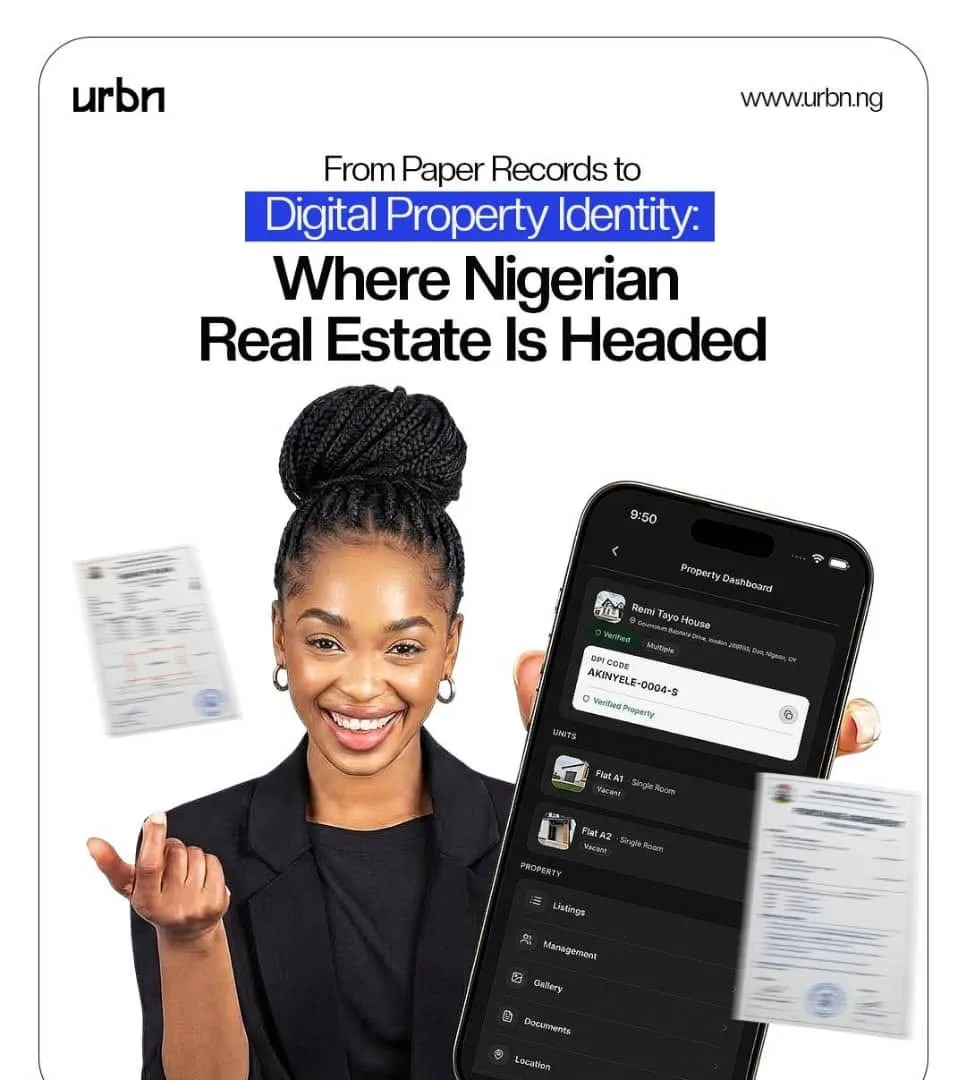
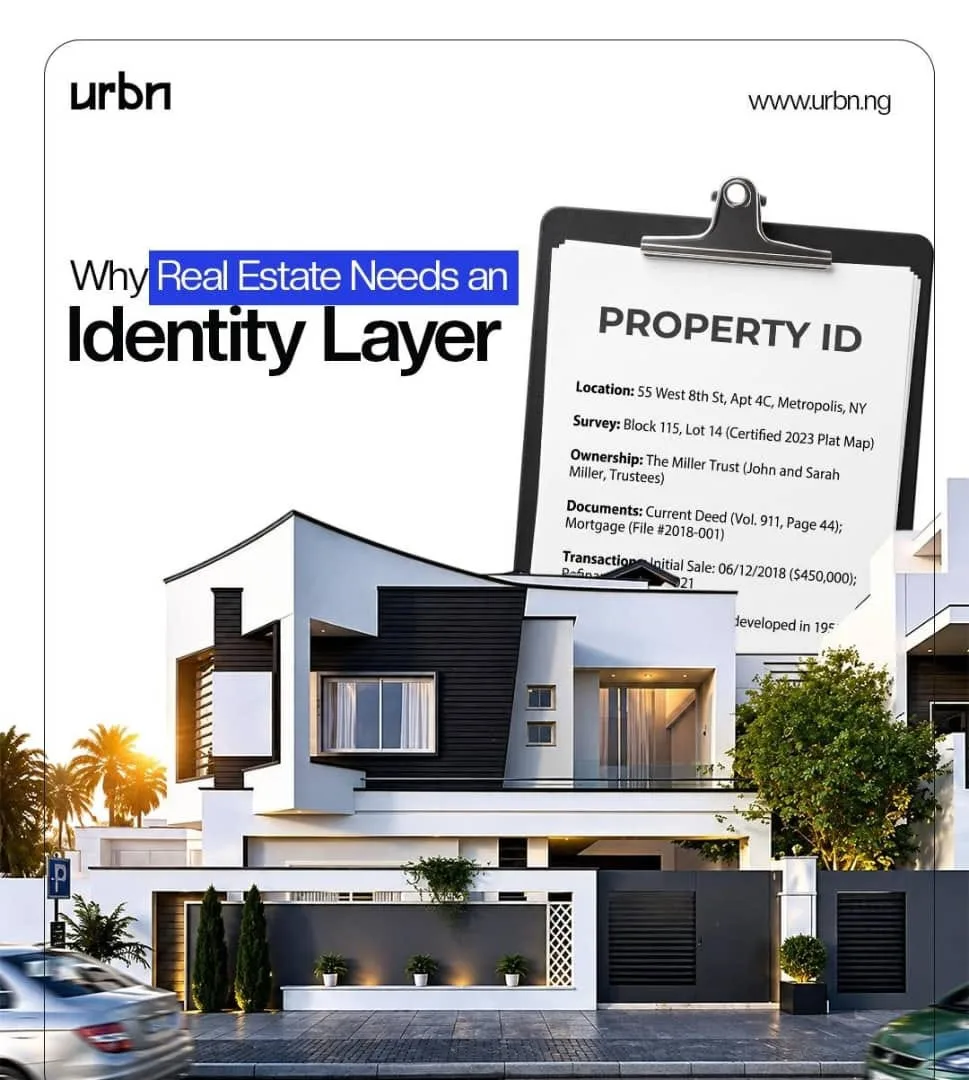
That’s exactly what Urbn is doing — giving every property a persistent identity of its own — a reference its records can reliably point to, no matter how many hands the property passes through.
Tunde’s land was real. His documents were real.
What his transaction was missing wasn’t paperwork but rather a connection between all of the paperwork.
Originally published on Medium.